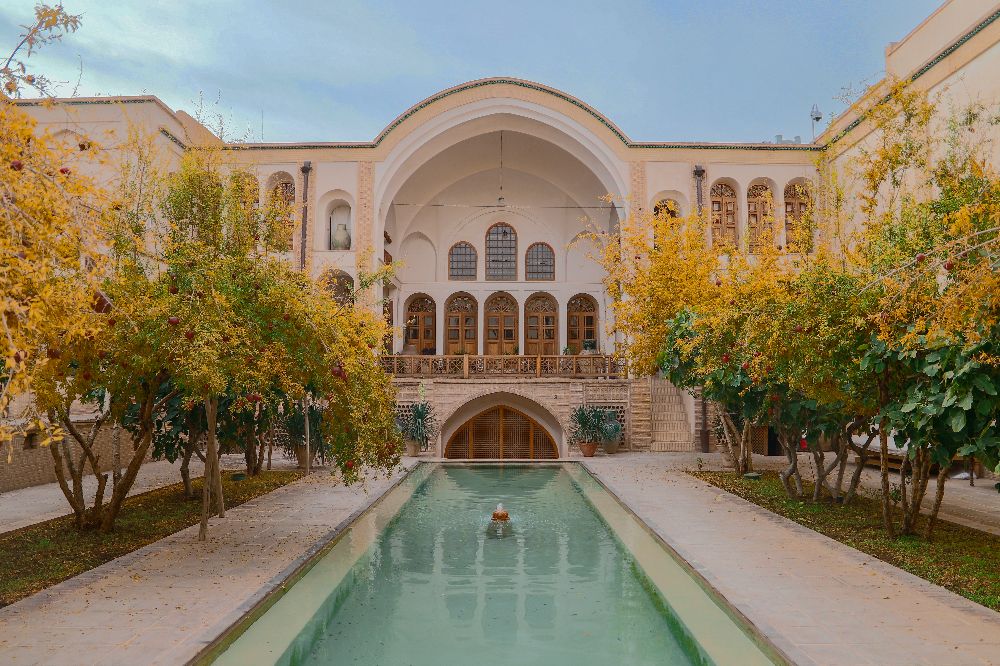
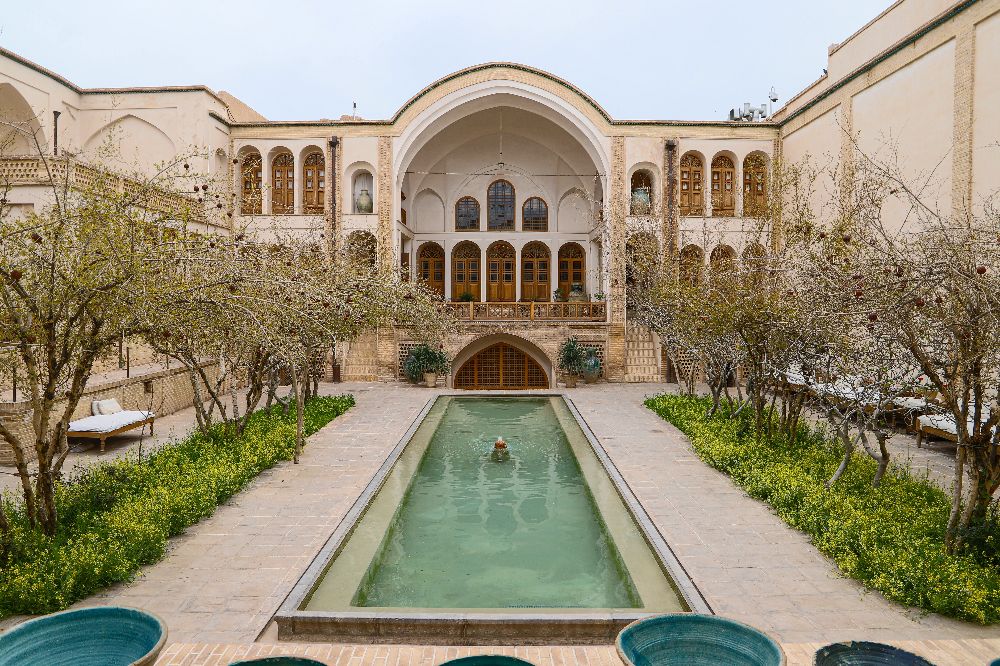
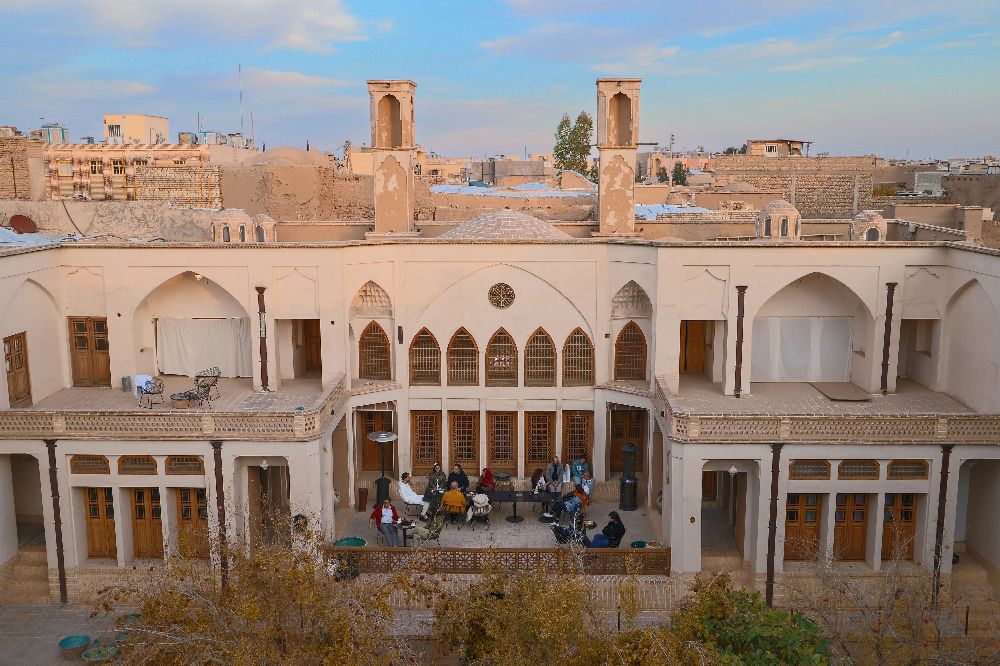
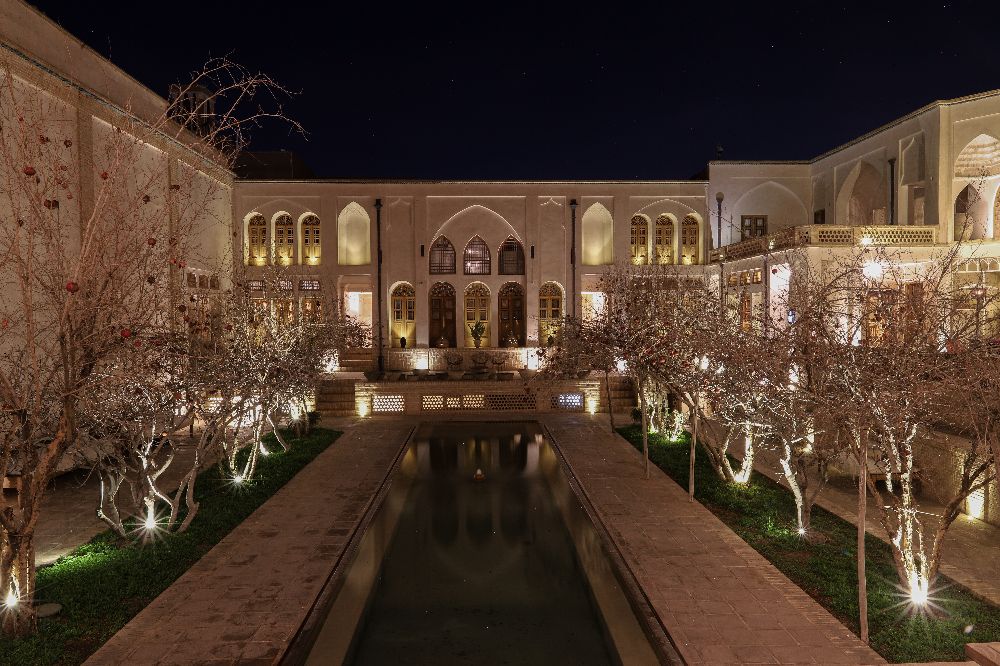
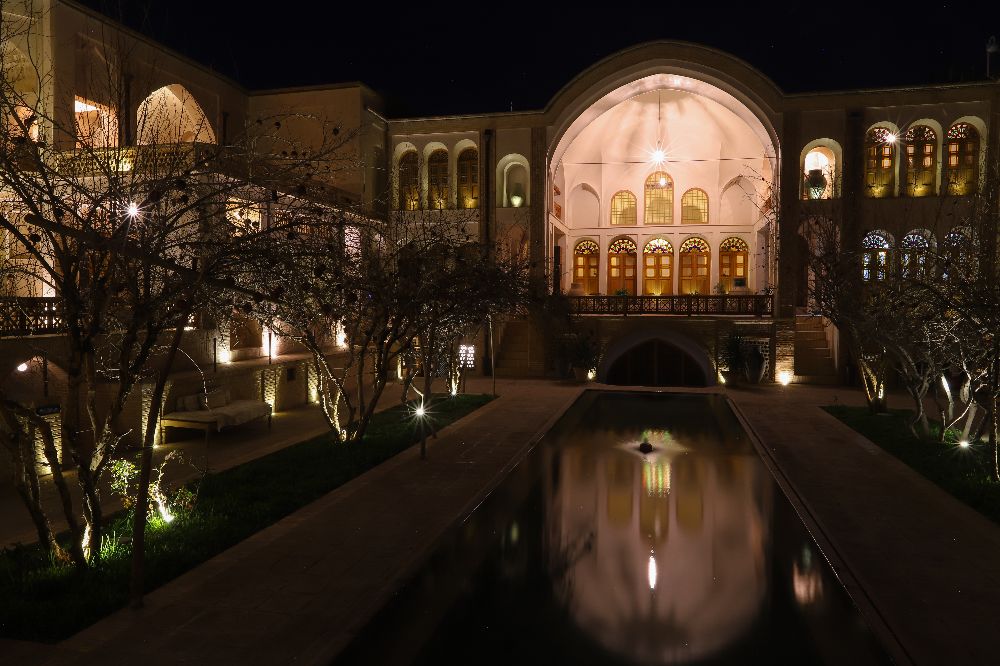
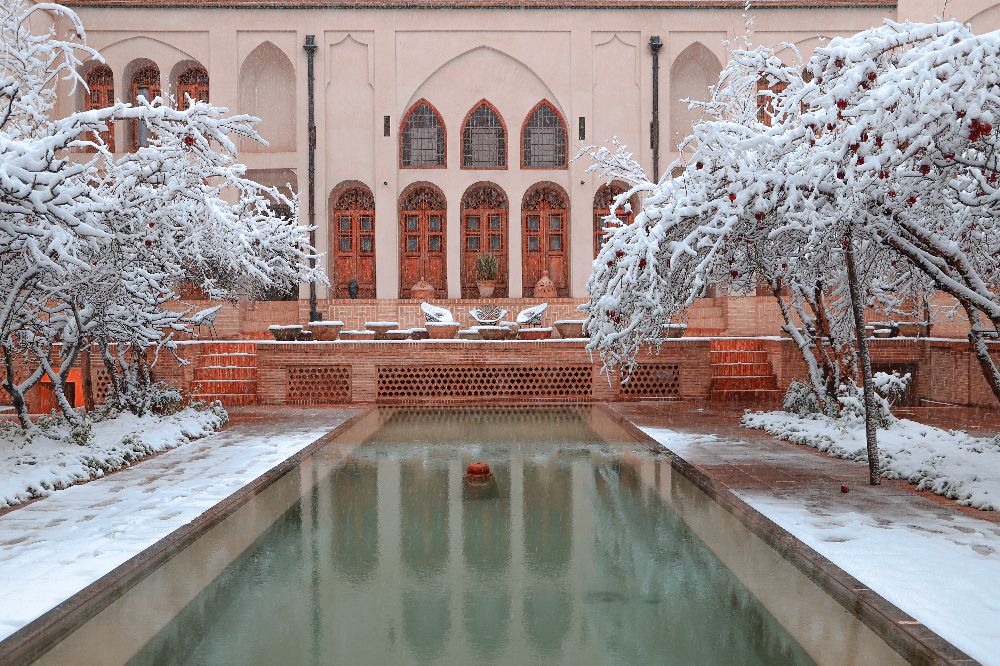
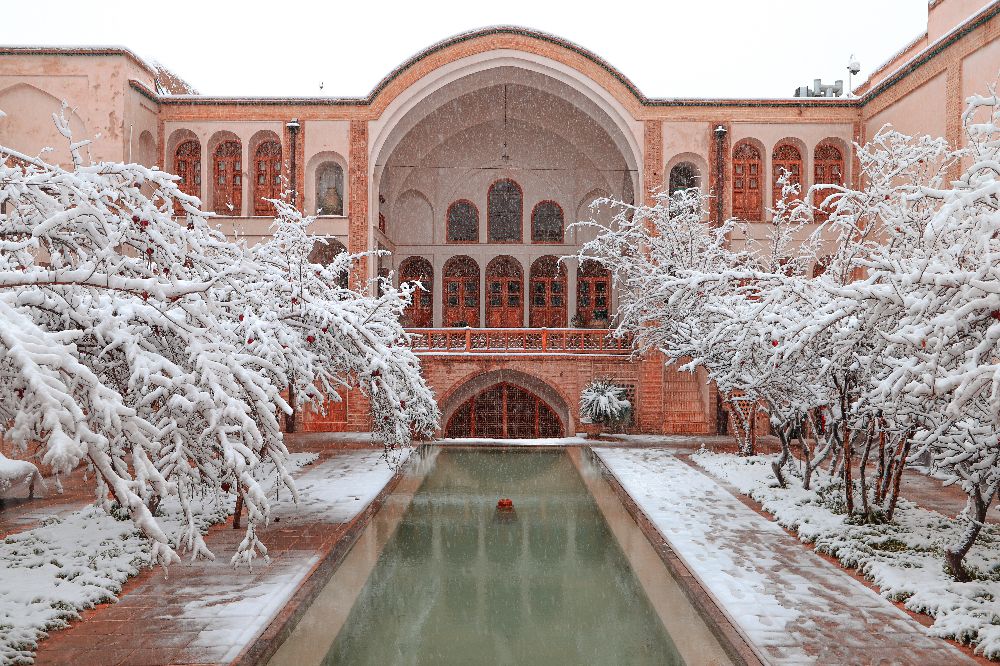
The Manouchehri cultural complex, located in the historical center of Kashan, is a magnificent gem of traditional Persian architecture from the late 1800s. After Kashan’s major earthquake in 1778, the house was rebuilt in three different time periods. The current restoration began in 2005, and was completed in 2008.
The philosophy behind the restoration aims to create a space of fusion between old and new, contemporary and traditional, east and west. Our aim is to create a space of cultural, architectural, culinary, artistic and musical fusion that fits the 21st century.
The restoration method was inspired by the artforms and traditions inherent to the central desert region of Iran. While it included the addition of modern facilities according to highest global standards, particular attention was paid to respecting UNESCO standards of restoration.
The complex hosts twelve guest rooms, each featuring its own unique decorative qualities, distributed along three sides of a central courtyard. All rooms open to a delightful view of the central pool and garden, lined with fig and pomegranate trees. Our dining hall is one of the most magnificent traditional spaces of the building. With a row of colored-glass sash windows, it accommodates guests for breakfast from 7:30 to 10:00am, and operates as a coffeeshop from 5 -11 pm. Guests may visit Deeg Restaurant, located in the Manouchehri 2 complex, for meals.
A modern cinematheque, located in the traditional cistern of the house, offers a cultural program available to our residential guests.
At the heart of the complex lies a traditional weaving workshop containing velvet weaving (Makhmal-bafi) looms and a traditional gold brocade weaving (Zari-bafi) loom. The workshop is dedicated to the education, revival, and conservation of the valuable craftsmanship of this region, which once prided itself to global fame. The beautiful fabrics produced in this workshop, alongside other hand-crafted Iranian artifacts from all over the country, are available for purchase at our Art Shop.
In continuation of our mission, a second building was restored and added to the complex in 2017. The second house, which represents three different architectural periods ranging from the 18th century to the 1950s, hosts thirteen guest rooms, Deeg restaurant, a handloom weaving workshop as well as the MTM Passage Textile Museum.
The vast entrance way of the second Manouchehri complex houses a passage museum, carefully designed and built to display the Manouchehri Textile Collection. This private collection, acquired over multiple decades and still growing, aims to preserve the magnificent art of traditional Persian textiles for future generations of weavers, embroiderers, designers as well as the general public. For more information on the Manouchehri Textile Museum, kindly refer to this link.
The lobby of the second Manouchehri complex contains an interactive weaving workshop with three traditional handlooms (Shar-bafi) producing a variety of silk, cotton and wool textiles. Right upon arrival, guests can mingle with weavers, observe and familiarize themselves with the intricate techniques. Purchases as well as custom orders can be coordinated with the Manouchehri Art Shop.
The fountain portico, adjacent to the main courtyard and gardens of the house, awaits guests with refreshments from the coffee shop.
Deeg Restaurant, located in the expansive cooling cellar (Sardaab) of the house, welcomes guests for delightful interpretations of fusion breakfast, lunch and dinner.